
Residential Tile Installation
Floors, walls, entryways, and living spaces in homes throughout Alamitos Beach, Downtown Long Beach, and Belmont Shore.
What Residential Tile Installation Actually Involves
Residential tile installation is the process of permanently bonding ceramic, porcelain, natural stone, or specialty tile to floors, walls, and other surfaces inside a home. The scope ranges from a single kitchen backsplash to a full-home floor replacement, and the complexity of each job is determined less by square footage than by what's underneath the tile and how level, flat, and structurally sound that substrate is.
In the Long Beach area, we commonly encounter slab-on-grade concrete foundations in mid-century homes, wood-framed subfloors in the craftsman bungalows common in Belmont Shore, and elevated concrete decks in the newer condo buildings along the Alamitos Beach corridor. Each substrate type requires a different preparation approach. Concrete slabs need to be checked for moisture vapor emission and any cracks stabilized with crack-isolation membrane before tiling. Wood subfloors need to meet a deflection standard of L/360 or better — meaning the floor should flex no more than 1/360th of the span length under load — and often require an uncoupling membrane like Schluter DITRA to decouple the tile from the natural movement of the wood.
Layout and Pattern Planning
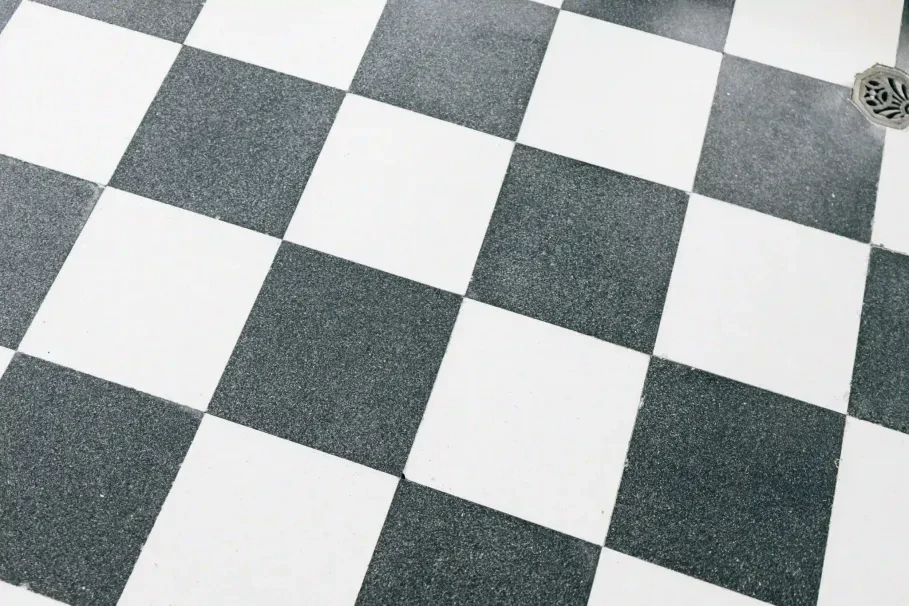
Before any tile is set, we plan the layout dry. This means placing full tiles without adhesive to confirm the pattern works, that cut tiles at walls and transitions are balanced (no slivers), and that any pattern like herringbone or diagonal is correctly oriented to the room's dominant axis. On large-format tiles (24"x24" and above), this step also reveals any substrate flatness issues that need to be addressed before installation begins, since large tiles cannot bridge low spots the way smaller tiles can.
We use chalk lines and laser levels to establish the layout grid and mark starting points. This is the work that determines whether the finished floor looks professionally installed or just competently installed — the difference is in the planning before the first tile goes down.
Available in Our Service Areas
We offer residential tile installation throughout Alamitos Beach, Downtown Long Beach, and Belmont Shore. Scheduling is available Monday through Sunday, 7:00 AM to 10:00 PM.
What's Included
We check flatness, deflection, moisture, and structural integrity before any tile goes down.
Grinding high spots, filling low spots, applying crack-isolation or uncoupling membrane as needed.
Full dry-lay before setting to confirm pattern, balance cut tiles, and mark the grid.
Full thinset coverage — back-buttered on large format — with leveling clips on floor tile to prevent lippage.
Grout mixed to proper consistency, packed fully into joints, haze removed, and surfaces cleaned.
Penetrating sealer applied to cement-based grout and any natural stone tile as part of the standard finish.
Common Questions
Can you tile over existing tile?
In some cases, yes — if the existing tile is fully bonded (no hollow spots), level, and the added height won't cause problems at transitions, doors, or appliances. We check the existing surface before committing to this approach. In many cases, removal is the better long-term choice because it lets us inspect and repair the substrate.
How long do I need to stay off a newly tiled floor?
Light foot traffic (socks, no furniture) is generally acceptable after 24 hours. Normal use with furniture can resume after 72 hours. Grout should be sealed before any wet mopping. We'll give you the specific timeline for your project based on the thinset and grout products used.
Do you handle tile removal?
Yes. Tile demolition is available as part of the project scope. We remove tile and thinset down to the substrate, haul the debris, and prep the surface for new installation. The cost depends on the tile type (porcelain is harder to remove than ceramic), substrate beneath, and access.