
Bathroom & Shower Tile
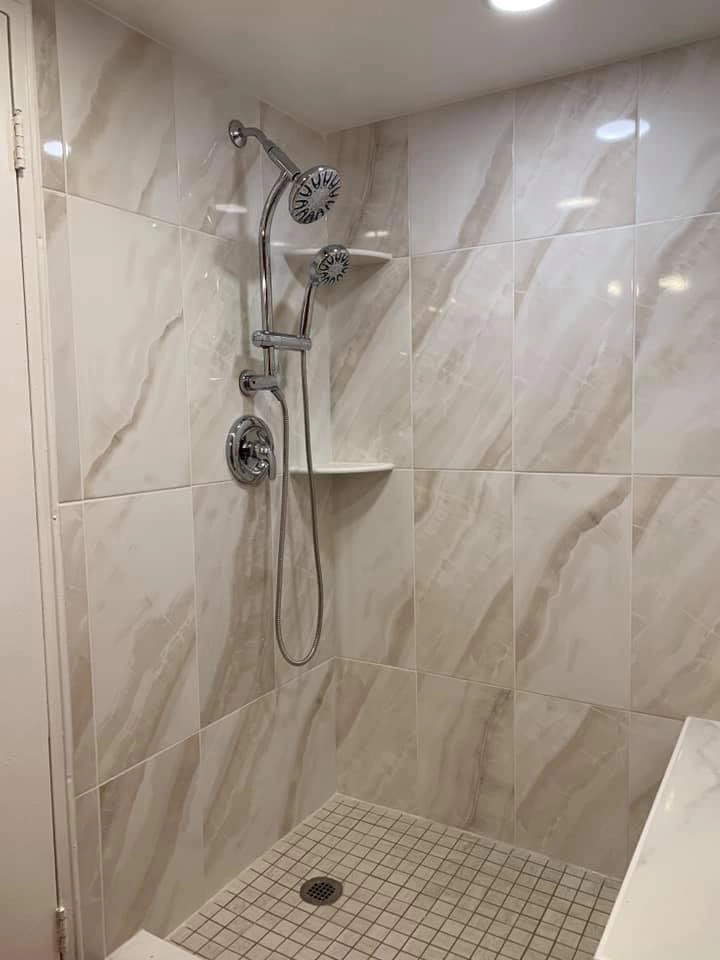
Full wet-area tile work — waterproofing, walls, floors, niches, and bench installations — done in the right order with the right materials.
Why Shower Tile Work Is Different from Floor Tile Work
Shower tile installation is a waterproofing project that also involves tile. The order of operations and the materials used at each stage determine whether the finished shower stays watertight for a decade or starts leaking behind the walls within a few years. Most shower failures we're called in to fix trace back to skipped or incorrectly applied waterproofing — not to any problem with the tile itself.
We use sheet-applied or liquid-applied waterproofing membranes (most often Schluter KERDI or RedGard) on all shower walls before tile goes up. The membrane is applied directly over cement board or directly over the studs with appropriate substrate preparation, then flood-tested before tile installation begins. This step adds time to the project, but it's the step that determines how long the shower lasts.
Shower floors present their own considerations. The floor must slope toward the drain — a standard fall of 1/4 inch per foot — and the slope must be consistent across the entire floor surface. On pre-sloped foam shower pans, this is straightforward. On site-built mud-bed floors, the slope is established by screeding a layer of deck mud (Portland cement and sand, mixed dry) before the waterproofing membrane goes down. Mosaic tile on shower floors (1"x1" or 2"x2") conforms to the slope better than large tiles and provides more grout joint contact area, which improves traction.
Available Throughout Our Service Areas
Bathroom and shower tile work is available in Alamitos Beach, Downtown Long Beach, and Belmont Shore.
The Shower Installation Process
Demo and Substrate Prep
Existing tile and backer board removed. Framing inspected for rot or damage. New cement board or foam substrate installed and fastened per manufacturer specs.
Waterproofing Membrane
Sheet or liquid membrane applied to all walls and floor. Corners and seams reinforced with fabric tape embedded in the membrane. Flood test before proceeding.
Tile Layout and Setting
Dry layout planned from the focal wall. Tile set with full mortar coverage using back-buttering on large format. Leveling clips used on walls to prevent lippage.
Grouting and Sealing
Grout mixed and packed into joints. Haze removed after initial set. Penetrating sealer applied to all cement grout. Silicone caulk at all corners and transitions (never grout at movement joints).